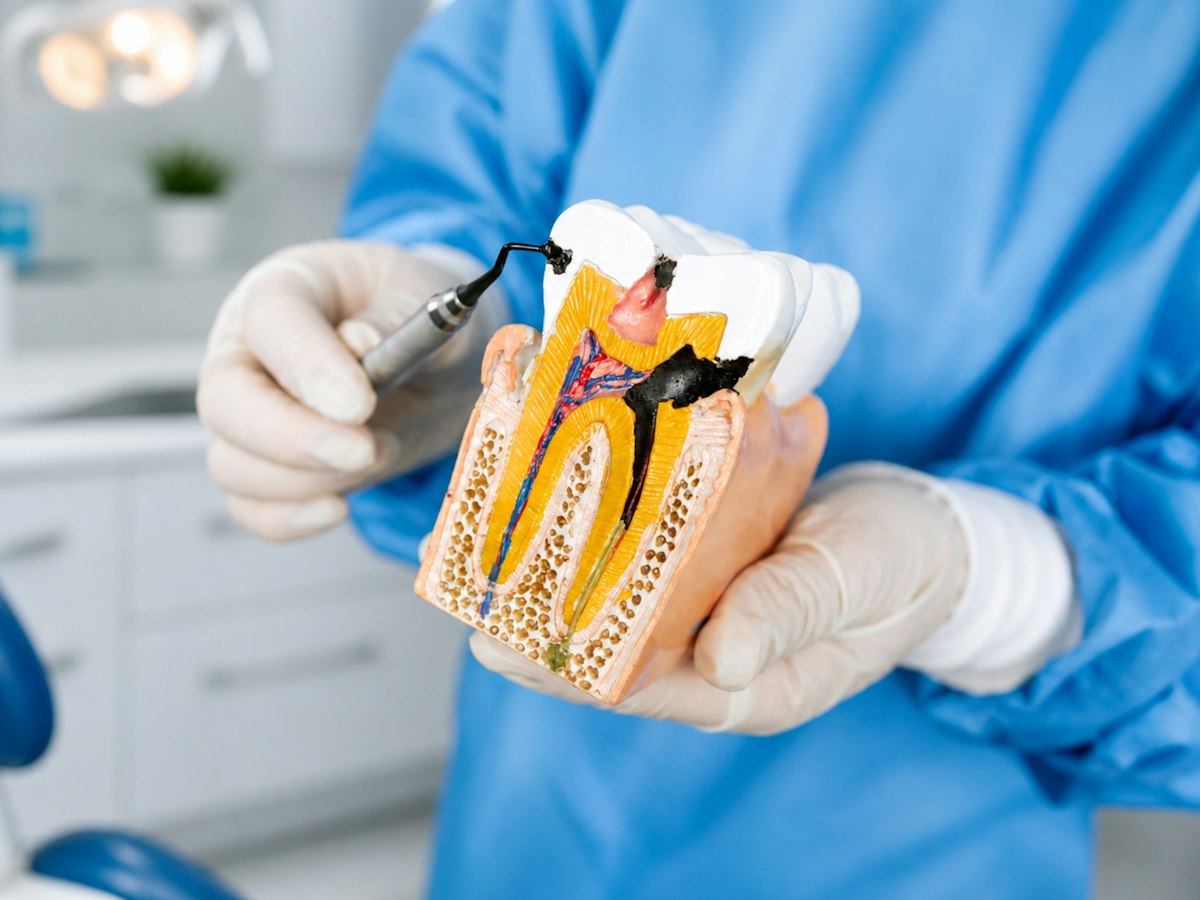
Saving the tooth from the inside
Inside every tooth is soft tissue with nerves and blood vessels. If deep decay, a crack or an injury lets it become inflamed or infected, a dentist may suggest root canal treatment: cleaning out that tissue, disinfecting the channels in the root and sealing them.
The procedure is done under local anaesthetic and feels, for many people, much like a long filling. It may take one visit or two, and a general dentist or a root canal specialist, called an endodontist, may carry it out.
What this page covers
- Signs that can lead a dentist to suggest it
- What happens during the appointment
- Temporary fillings between visits
- Why a crown is often placed afterwards
- The alternative of removing the tooth, and what follows that
- What to expect in the days after
Afterwards
The tooth can feel tender for a few days. Many dentists then suggest a crown, because a tooth that has had root canal treatment can be more brittle. Ask whether yours needs one, and how soon.
A question worth asking: “If we do not treat this tooth now, what is likely to happen next?”
Common questions
The area is numbed first, so most people feel pressure rather than pain during it. Tenderness afterwards is common for a few days. Tell the dentist if you feel anything sharp.
Some teeth have curved or narrow roots, or need treatment redone. A general dentist may suggest an endodontist for those.
Usually, yes. Ask what removing it would mean for chewing and for the teeth around it, and what replacing it would involve.
This page is general information. It is not a diagnosis or advice about your own teeth; ask a licensed dentist who has examined you.