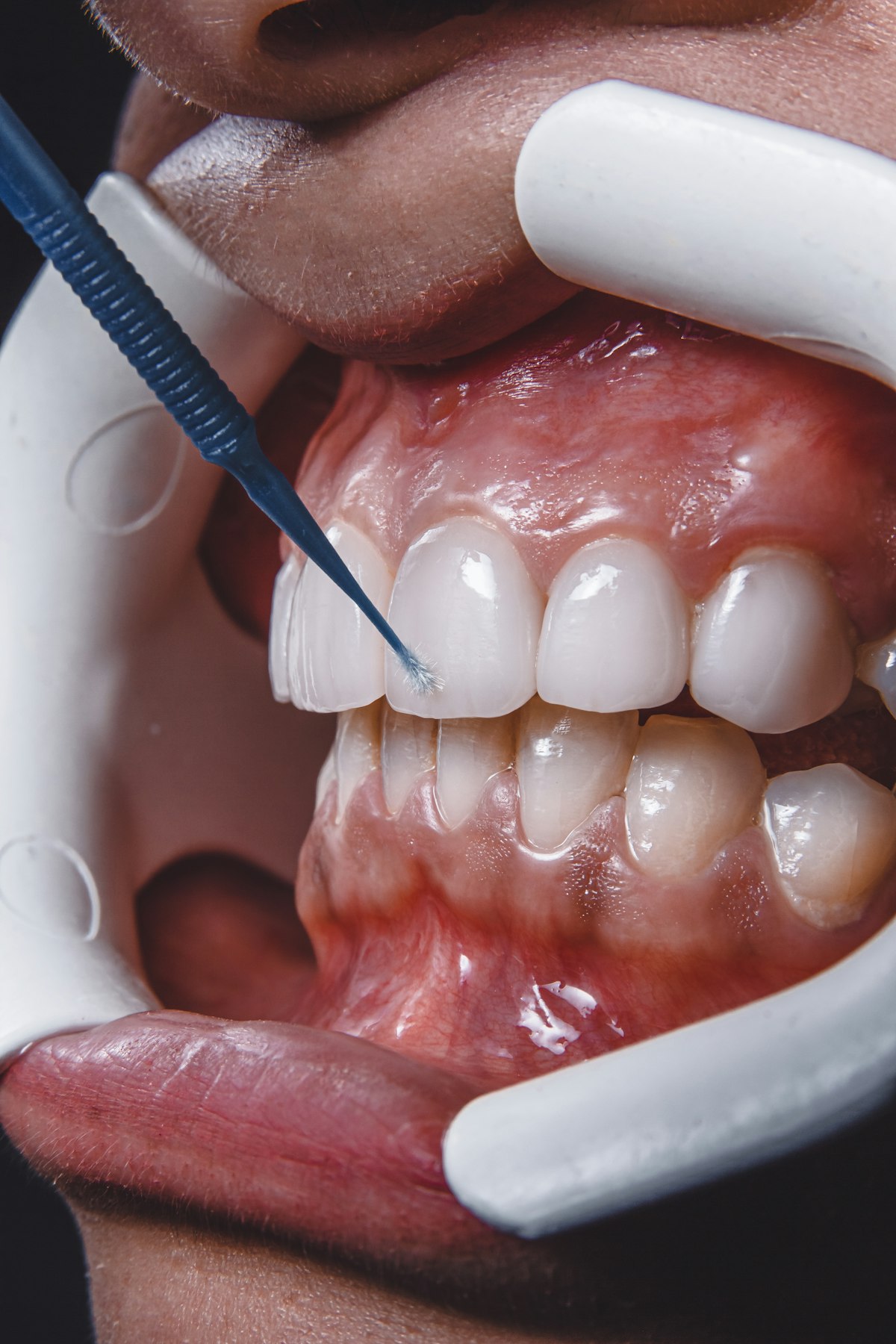
The part of the mouth people forget
Gums hold teeth in place, and trouble there often starts quietly. Early inflammation, called gingivitis, can make gums red, puffy and quick to bleed when you brush. If it carries on, it can move deeper and loosen the support around the teeth over time.
Dentists check gums by gently measuring the small pockets between gum and tooth. Those measurements, taken over several visits, show whether things are steady or changing.
What this page covers
- What bleeding when you brush can and cannot tell you
- Gum pocket measurements and what the numbers describe
- Scaling and root planing, often called a deep cleaning
- Receding gums and sensitive roots
- Smoking, diabetes and other things that affect gums
- Brushing, floss and small brushes between the teeth
What a deep cleaning is
When deposits sit below the gum line, a hygienist or dentist may clean the root surfaces under local anaesthetic, often one part of the mouth at a time. It is different from a routine cleaning, and it is fair to ask why it is recommended and what follow-up visits would look like.
A question worth asking: “How have my gum measurements changed since last time?”
Common questions
Most dentists suggest the opposite: keep brushing gently. Bleeding that carries on for more than a couple of weeks is worth raising at your next visit, or sooner.
Gum that has pulled back does not usually grow back on its own. A dentist can explain whether it is changing and what options exist if it is.
No. It reaches below the gum line and often needs numbing and more than one visit. Ask what the measurements showed that led to the suggestion.
This page is general information. It is not a diagnosis or advice about your own teeth; ask a licensed dentist who has examined you.